Cavoodle Coat Types Explained
A complete guide to shaggy, fleece and wool Cavoodle coats
When choosing a Cavoodle or Theodore Cavoodle, one of the most important factors to understand is coat type. Coat type affects not only how your puppy looks, but also grooming requirements, shedding levels, and overall maintenance.
Cavoodles generally have three main coat types:
- Shaggy (straight) coat
- Fleece (wavy) coat
- Wool (curly) coat
Each coat type is influenced by genetics and has its own unique characteristics. This guide will help you understand the differences so you can make an informed decision.
Why coat type matters
A Cavoodle’s coat is not just about appearance. It directly impacts:
- Shedding levels
- Grooming frequency
- Coat maintenance
- Suitability for different households
Understanding coat types early helps set clear expectations as your puppy grows and develops its adult coat.
The three Cavoodle coat types
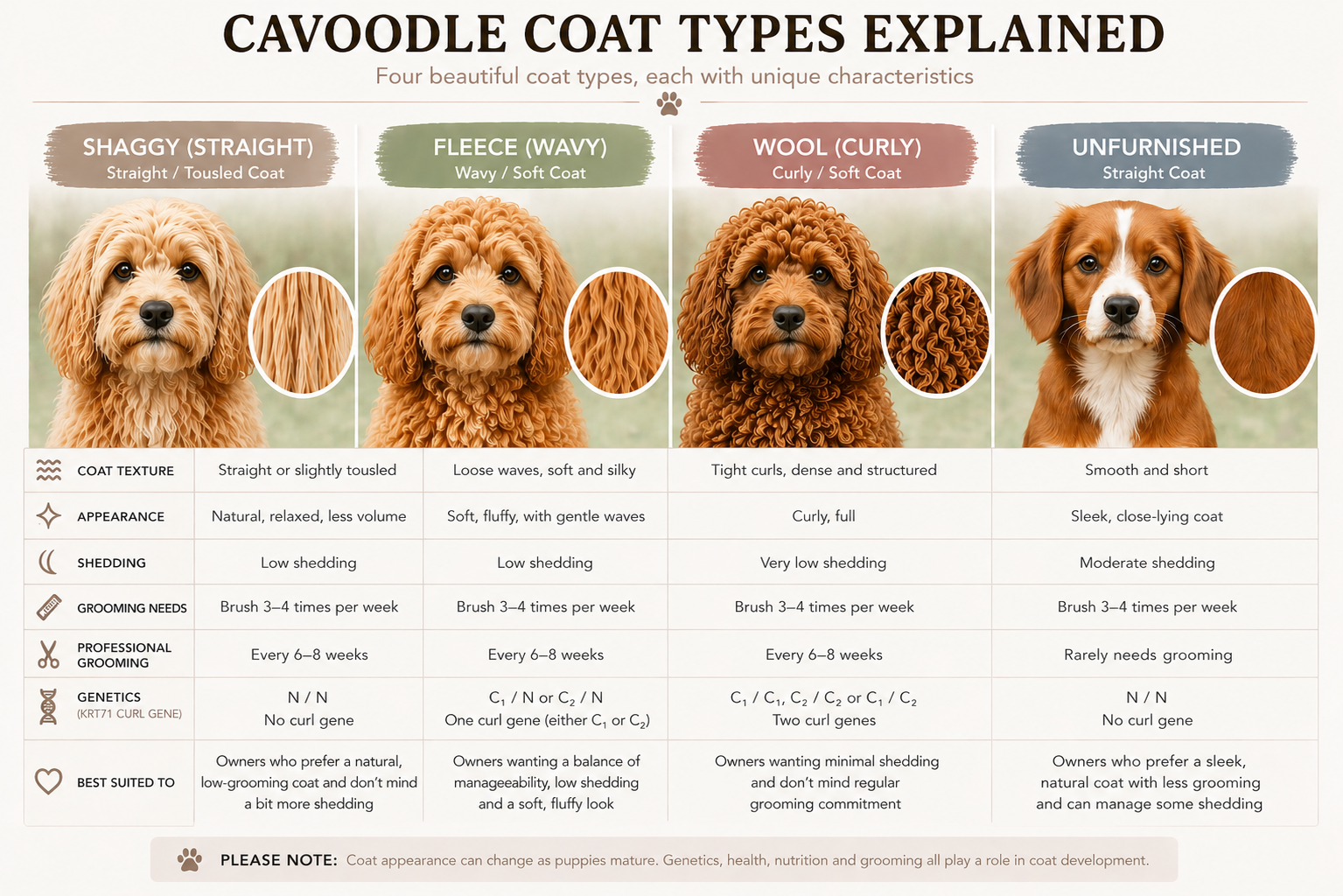
Shaggy (Straight) Coat
The shaggy coat is the most natural-looking coat type.
- Straight or slightly tousled appearance
- Less dense than other coat types
- More likely to shed
- Often lower grooming requirements
This coat can sometimes be unfurnished, meaning it may lack the beard and eyebrows typically associated with Cavoodles.
Fleece (Wavy) Coat
The fleece coat sits between shaggy and wool.
- Soft, silky texture
- Loose waves
- Light and natural finish
- Generally low shedding depending on genetics
This coat type offers a balance between appearance and manageability.
Wool (Curly) Coat
The wool coat is the curliest coat type and most similar to the Poodle coat.
- Tight, dense curls
- High coat volume
- Minimal shedding
- Higher grooming requirements
This coat requires consistent maintenance to prevent matting.
The genetics behind Cavoodle coat types
Cavoodle coats are largely influenced by the KRT71 curl gene, which determines how much curl is present.
Each dog inherits two copies of this gene, one from each parent. These can include variants known as C1 and C2, both of which produce curl.
- No curl (N/N): Shaggy coat
- One curl copy (C1/N or C2/N): Fleece coat
- Two curl copies (C1/C1, C2/C2, or C1/C2): Wool coat
The presence of one or two curl genes determines whether a coat is wavy or curly.
Other genes that influence coat type
While the curl gene plays a key role, several other genetic factors contribute to coat outcome.
Furnishings (RSPO2 gene)
Furnishings create facial hair such as beards and eyebrows. This gene is dominant and contributes to the classic Cavoodle look.
Shedding genes
These influence how much coat is retained or shed.
Coat density and texture
Multiple genes influence softness, thickness, and overall appearance. Because of this, coat types can vary even within the same litter.
Grooming differences between coat types
Each coat type has different grooming requirements:
- Shaggy coat: Lower maintenance, may shed more
- Fleece coat: Moderate maintenance, regular brushing required
- Wool coat: Higher maintenance, frequent grooming needed
Regular grooming is important for all coat types to maintain coat health and comfort.
How breeders influence coat types
Responsible breeders use DNA testing and pairing strategies to influence coat outcomes.
By understanding:
- Curl gene combinations (C1 and C2)
- Furnishings
- Shedding markers
Breeders can produce more predictable coat types and help match puppies to suitable homes.
Choosing the right Cavoodle coat type
There is no single “best” coat type. The right choice depends on your lifestyle.
- Choose shaggy if you prefer a more natural coat and don’t mind some shedding
- Choose fleece if you want a balance of softness and manageability
- Choose wool if you prefer tight curls and minimal shedding
If you are unsure, we recommend speaking with your breeder to understand what will suit your home best.
Cavoodle coat types and puppy development
It is important to note that:
- Puppy coats can change as dogs mature
- Final coat type may not fully develop until later
- Grooming, nutrition, and environment can influence coat condition
Understanding genetics helps set expectations, but some variation is always natural.
Summary: Cavoodle coat types explained
Cavoodles have three main coat types:
- Shaggy (straight): No curl gene, more natural coat
- Fleece (wavy): One curl gene (C1 or C2), soft waves
- Wool (curly): Two curl genes, tight curls
Each coat type has different grooming needs and characteristics, and understanding these differences helps ensure the right fit for your lifestyle.