A complete guide to fleece Cavoodle coats, genetics, grooming, and breeding
When choosing a Cavoodle or Theodore Cavoodle, understanding coat types is essential. Cavoodles typically have three main coat types: shaggy (straight), fleece, and wool. Each coat type differs in texture, grooming needs, and genetics.
This guide explains the fleece Cavoodle coat, including how it looks and feels, the DNA behind it, and how ethical breeders produce it.
If you are just starting your research, you may also find it helpful to read our full guide to Cavoodle coat types here:
What is a fleece Cavoodle coat?
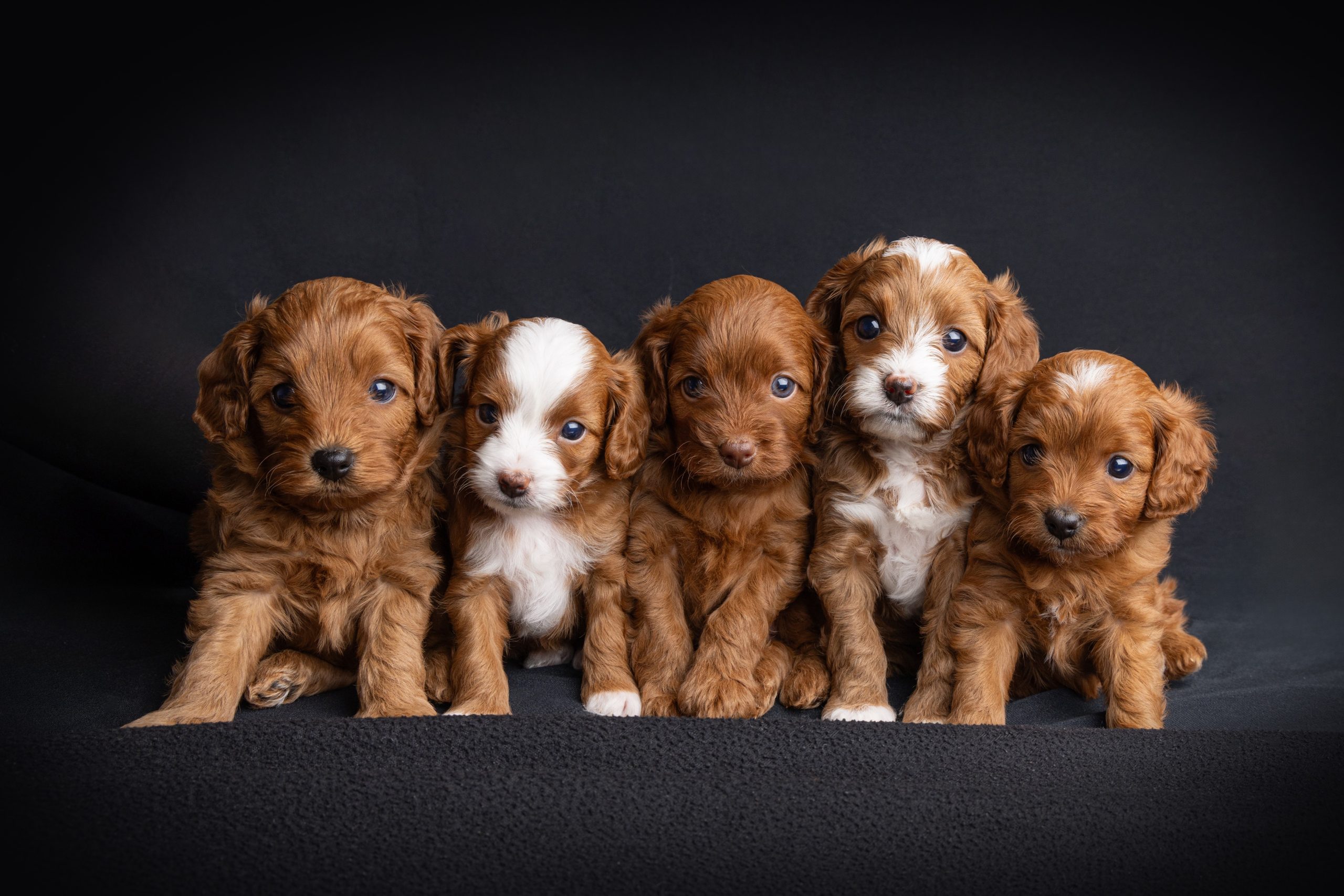
A fleece coat is the wavy coat type that sits between shaggy and wool.
- Soft, silky texture
- Loose waves rather than tight curls
- Light, natural finish
- Typically low-shedding depending on genetics
Fleece coats are commonly seen in Cavoodles and are valued for their balanced texture and manageability.
Cavoodle coat types explained
Cavoodles generally fall into three coat categories:
- Shaggy (straight/unfurnished) – more natural coat, may shed more
- Fleece (wavy) – soft waves with lower shedding
- Wool (curly) – tight curls with minimal shedding
Fleece coats sit in the middle, both visually and genetically.
The genetics of a fleece coat (KRT71 curl gene)
The fleece coat is primarily determined by the KRT71 curl gene.
Each dog inherits two copies of this gene, one from each parent. These copies determine how much curl develops in the coat.
The curl gene includes variants known as C1 and C2, both of which produce curl.
- N/N (no curl): Shaggy or straight coat
- C1/N or C2/N (one curl copy): Fleece coat
- C1/C1, C2/C2, or C1/C2 (two curl copies): Wool coat
A fleece coat occurs when a puppy inherits one copy of a curl variant, regardless of whether it is C1 or C2.
C1 vs C2 curl variants in Cavoodles
Both C1 and C2 contribute to curl, and either can produce a fleece coat.
- C1/N: Often associated with a looser, softer wave
- C2/N: May produce a slightly more defined wave
The difference is usually subtle. Final coat appearance depends on additional genes influencing texture, density, and shedding.
Additional genes that influence fleece coats
Furnishings (RSPO2 gene)
Furnishings create facial hair such as beards and eyebrows. This gene is dominant and contributes to the classic Cavoodle appearance.
Shedding genes
These influence how much coat is retained or shed. Fleece coats are generally low-shedding but not guaranteed to be non-shedding.
Coat density and texture
Multiple genes influence softness, thickness, and overall coat finish, which is why fleece coats can vary.
Grooming a fleece Cavoodle coat
Fleece coats require regular maintenance:
- Brushing several times per week
- Professional grooming every 6–8 weeks
- Regular care in high-friction areas
Looking after your dog’s coat properly will help maintain softness and prevent matting.
How fleece coats are bred
Producing fleece coats consistently requires careful genetic pairing.
The most predictable pairing is:
- One parent with two curl copies
- One parent with no curl copies
This pairing produces puppies with one curl copy, resulting in fleece coats.
Choosing the right coat for your lifestyle
Each coat type suits different households.
A fleece coat may suit families who want:
A soft, wavy coat
- Lower shedding
- Moderate grooming requirements
Summary: Understanding fleece Cavoodle coats
A fleece coat is one of the three main Cavoodle coat types. It is defined by:
- One curl gene (C1 or C2)
- Soft, wavy texture
- Moderate grooming needs
Understanding fleece coat genetics helps set clear expectations for coat type, maintenance, and long-term appearance.