
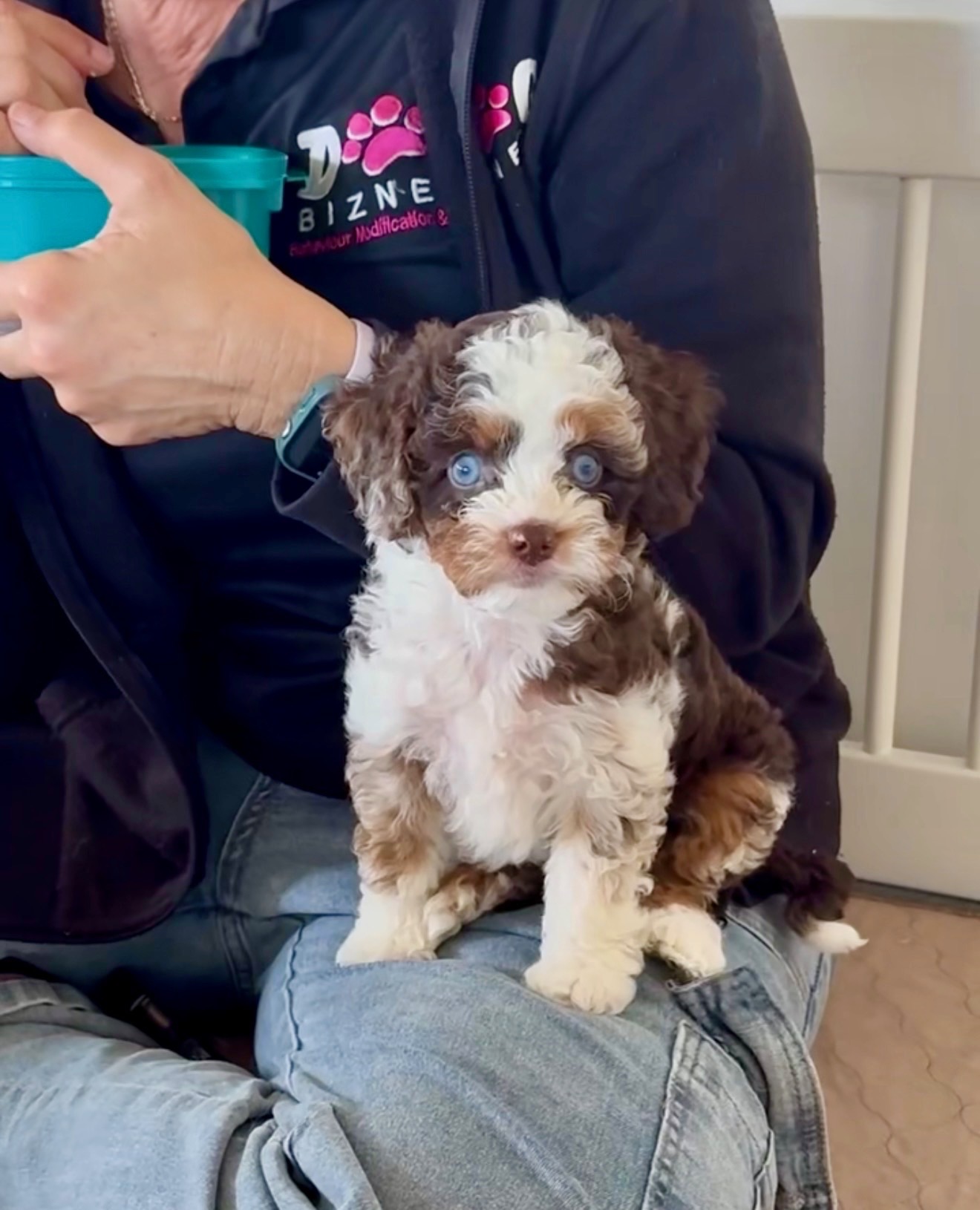
One of the most rewarding parts of raising puppies is watching them discover how the world works—and how much fun learning can be!
In this week’s training session, our wonderful trainer Kylie from Dog Bizness introduced the puppies to some simple reward-based training using tiny pieces of cooked chicken breast. While it might look like we’re teaching them a specific trick, the real goal is something much more important: teaching puppies how to be trained.
At this age, puppies are like little sponges. By pairing a behaviour with a reward, they begin to understand that offering behaviours, paying attention to people, and trying new things can lead to positive outcomes. These early experiences help build confidence, problem-solving skills, and a love of learning that will benefit them throughout their lives.
One of the activities Kylie introduced was a small bell that the puppies could touch with their nose or paw. Each time they interacted with the bell, they were rewarded with a treat. This simple game helps puppies learn cause and effect while encouraging them to think and engage with their environment.
Many families choose to use bells near a door as part of their toilet training routine. Over time, puppies can learn to ring the bell to let their family know they would like to go outside. However, bell training isn’t limited to toilet training. Some families use bells to request access to a particular area, indicate they would like to go outside to play, or as part of more advanced training and communication exercises.
Most importantly, these sessions provide valuable enrichment and positive experiences. The puppies are learning that people are fun, training is rewarding, and trying new things is something to be embraced rather than feared.
These early foundations are just one small part of our puppy raising program. By the time our puppies head home, they have already been exposed to a wide range of experiences designed to help them become confident, capable and adaptable family companions.
We think Kylie might have some future training stars on her hands!
Frequently Asked Questions
Why do you start training puppies before they go home?
Early training helps puppies develop confidence, learn how rewards work and build positive associations with people and learning.
What is puppy bell training?
Bell training teaches a puppy to touch or ring a bell with their nose or paw. Many families use this as a way for puppies to indicate they would like to go outside for toileting.
At what age can puppies begin training?
Puppies can begin simple reward-based learning experiences from a very young age. Training at this stage focuses on confidence, engagement and positive experiences rather than obedience.
What treats do you use for puppy training?
For this session, we used small pieces of cooked chicken breast as a high-value reward that the puppies found motivating and enjoyable.
Why is positive reinforcement important?
Positive reinforcement helps puppies learn through encouragement and rewards, creating a positive relationship with training and helping them develop into confident family companions.